


Case studies
Selected COAT-IT R&D and implementation projects – from passivation of zinc coatings and nickel plating, through the jewellery and automotive industries, to coatings for hydrogen infrastructure.
Ultrasound-assisted accelerated passivation of zinc coatings
Key resultPassivation time reduced from several weeks to a few hours
In this project we developed and validated an ultrasound-assisted technology for the accelerated passivation of zinc coatings, adapted to industrial conditions. The solution shortens the process from several weeks to just a few hours while maintaining a high-quality, uniform and effective protective layer.
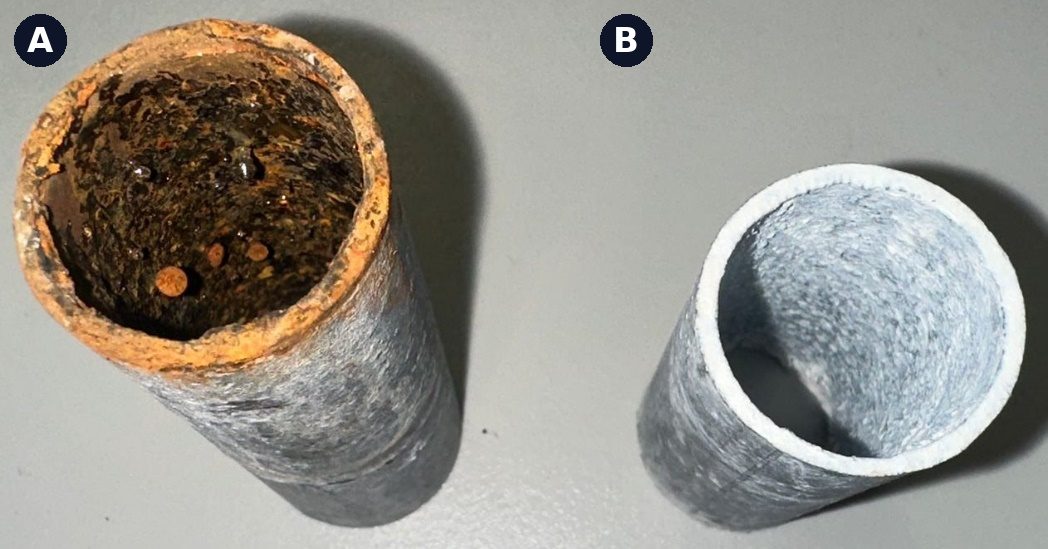
Our research confirmed the high corrosion resistance of the layers – comparable to or better than the patina that forms naturally on zinc surfaces (photo 1). The project delivered effective chemical formulations, confirmed that the process can be integrated with industrial lines and introduced a modern, non-destructive quality control method based on in-situ FTIR analysis.
The project provides a basis for further scaling of the technology and industrial implementation together with technology partners.
Photo 1. A – galvanised steel with natural passivation; B – galvanised steel after accelerated passivation.
Optimising the passivation process and developing a solution for a nickel plating line
Key resultHigher corrosion resistance confirmed in salt spray testing according to ISO 9227
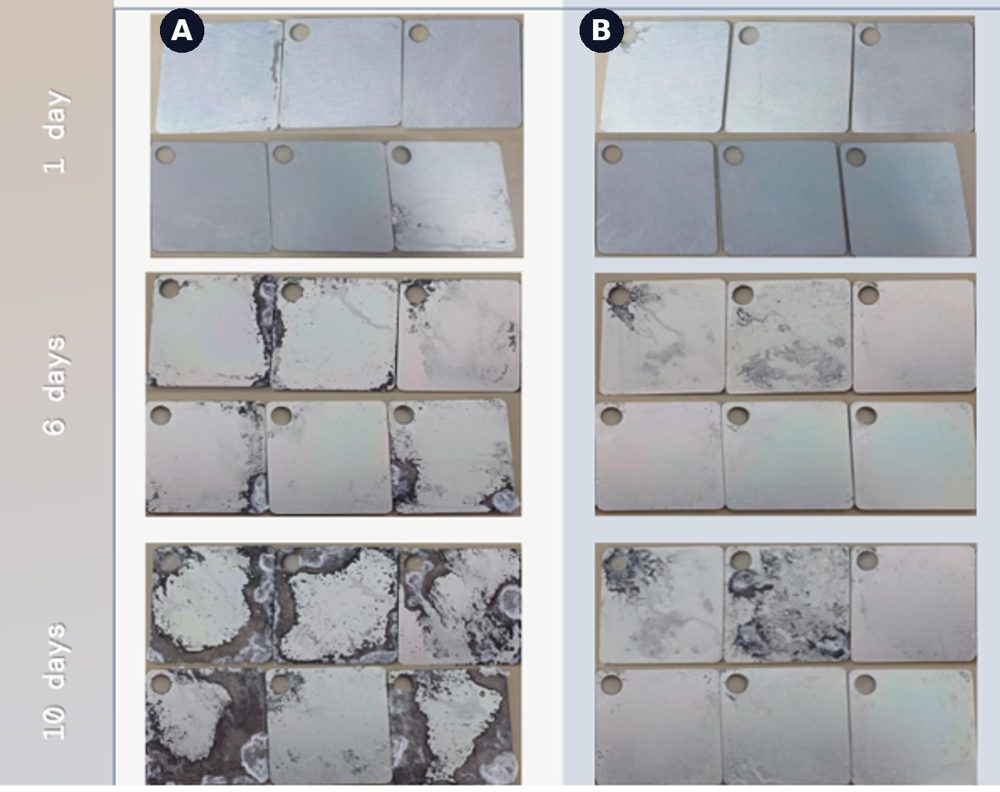
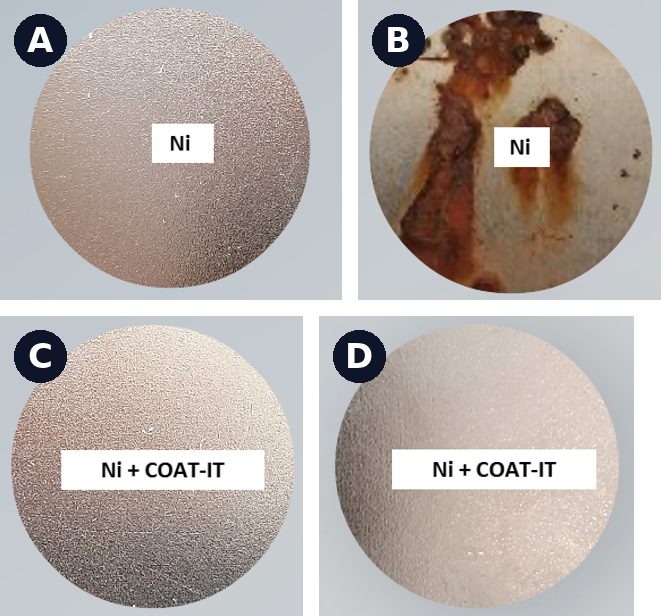
The project involved modifying zinc coating passivation and nickel plating technology for a selected grade of low-carbon steel, with a focus on improving corrosion resistance. We prepared nanomaterial-based additives dedicated to passivation (ADNEO 1000P) and nickel plating (ADNEO 100), produced coatings with and without nanomaterials, and then tested them in a salt spray chamber according to ISO 9227.
The results clearly confirmed that COAT-IT additives significantly improved corrosion resistance in both zinc coating passivation and nickel plating. Photo 1 (passivation) shows a surface with ADNEO 1000P, where white corrosion appears later and to a lesser extent than on the reference samples. Photo 2 (nickel plating) shows a coating with ADNEO 100, with a limited number of corrosion spots and a more uniform structure after exposure.
ADNEO 1000P and ADNEO 100 can also support the development of more durable and cost-effective solutions in the surface treatment industry, increasing the competitiveness of the technology in high-volume applications.
Photo 1. A – passivation without additive; B – passivation with ADNEO 1000P.
Photo 2. A – nickel coating without additive before the corrosion test; B – nickel coating without additive after 96 h in the salt spray chamber; C – nickel coating with ADNEO 100 before the corrosion test; D – nickel coating with ADNEO 100 after 96 h in the salt spray chamber.
Hydrogen-resistant coatings – technology for future installations
FundingProject co-financed by the European Funds for a Modern Economy (FENG)
As part of a project co-financed by the European Funds for a Modern Economy (FENG), we are carrying out R&D work on a new generation of functional coatings for applications in the hydrogen sector.
The aim of the project is to develop innovative coating solutions based on alloy materials and advanced nanomaterials that will improve the efficiency of hydrogen storage and transport. The key challenge is to limit the negative impact of hydrogen on structural materials, including hydrogen permeation and the degradation of the mechanical properties of components operating under demanding conditions.
We are developing specialised protective coatings designed to increase the resistance of materials to hydrogen while maintaining high durability and cost-effective industrial implementation. The project includes laboratory research, modelling of material properties and an assessment of the potential of the solutions for future hydrogen infrastructure.
The technologies under development are intended to support the energy transition and the building of a modern green-hydrogen economy, contributing to the safety, efficiency and economics of storage and transport systems for this strategic energy carrier.
Durable coatings – protection that enhances beauty
Key resultOnly the Ag + Pass + ADNEO 300 coating remained fully stable in the 2% K₂S test
Together with a global technology partner, we are developing advanced technologies for the fashion and jewellery industry. We focus on optimising silver plating processes, creating innovative solutions that increase the durability and resistance of jewellery to everyday wear.
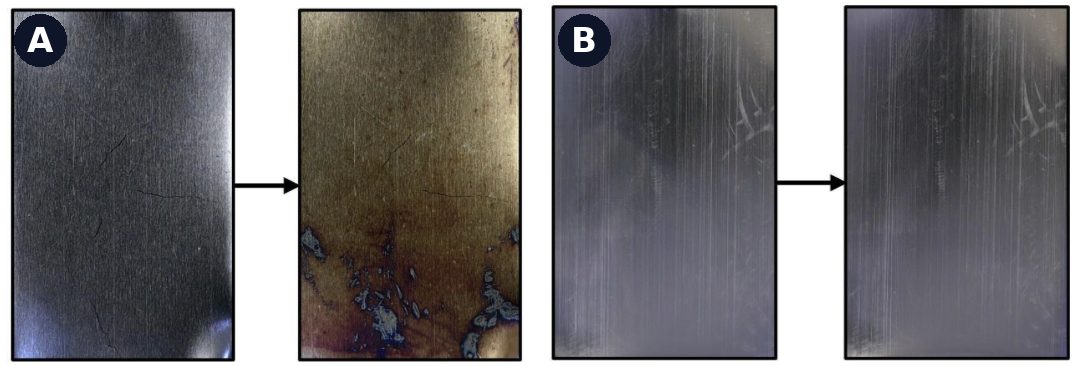
The ADNEO 300 nanoceramic dispersion was added to a cyanide-free silver plating and passivation bath. Impedance measurements (EIS) showed that ADNEO 300 increases charge transfer resistance, which means better corrosion protection. The order of increasing resistance is clear: Ag < Ag + ADNEO 300 < Ag + Pass < Ag + Pass + ADNEO 300. In an accelerated immersion test in a 2% K₂S solution, only the “Ag + Pass + ADNEO 300” coating remained fully visually stable, with no signs of tarnishing or surface degradation. This shows that combining passivation with a nanoceramic dispersion produces the most durable and resistant protective coating (photo 1).
By combining technological know-how, experience and international cooperation, we deliver solutions that meet the growing expectations of today’s fashion and jewellery market.
Photo 1. A – silver coating with cyanide-free passivation before (left) and after (right) the 2% K₂S test; B – silver coating with cyanide-free passivation and ADNEO 300 before (left) and after (right) the 2% K₂S test.
Less chemistry, the same protection – a new passivation for steel strips
Preliminary resultsLayer properties maintained with 50% electrolyte dilution
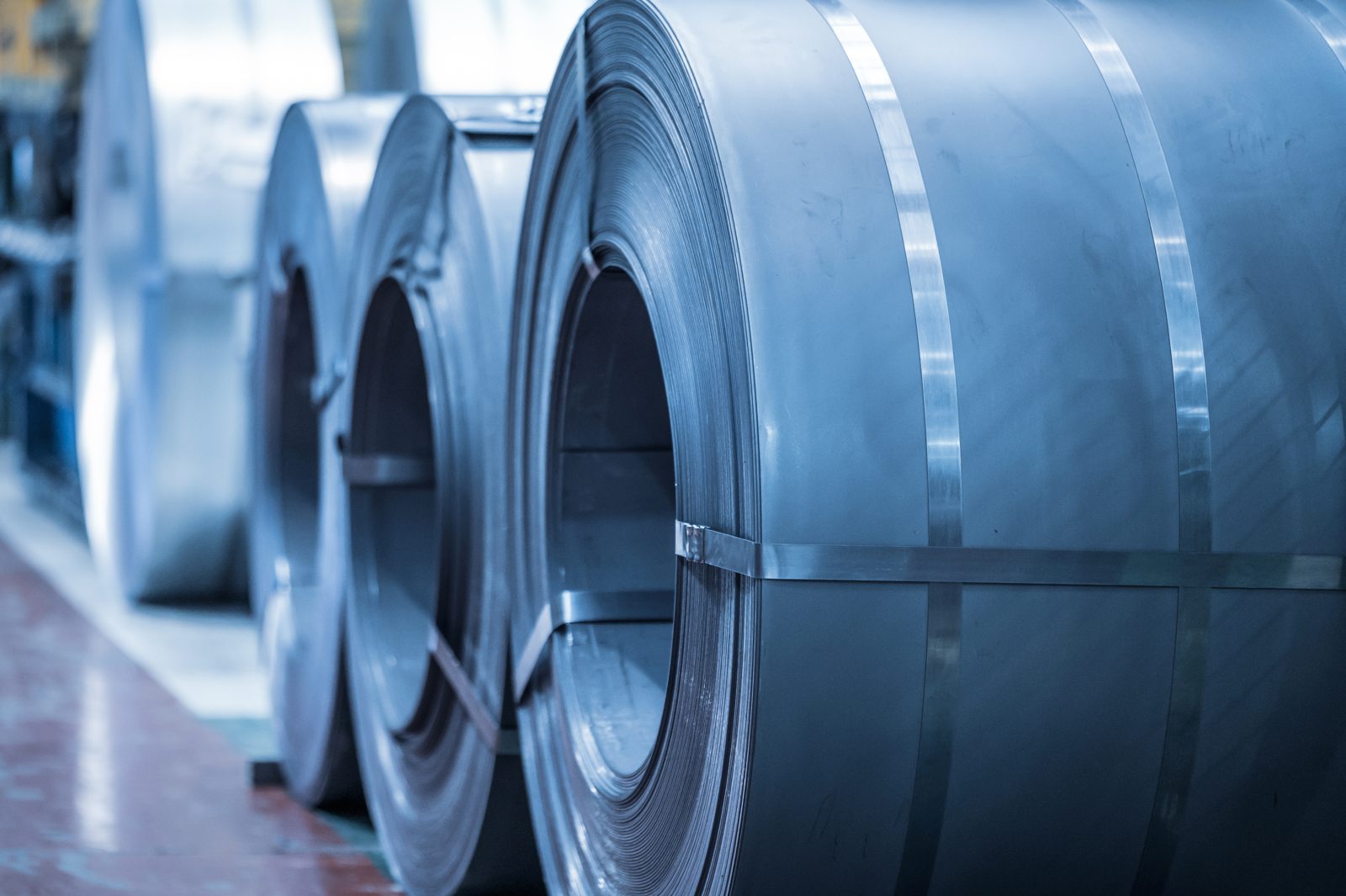
One of the technology development paths we are analysing is the possibility of reducing the amount of electrolyte used in surface passivation while maintaining the high protective performance of the conversion layer.
Initial observations and results indicate that our additives may make it possible to maintain the properties of passivation layers even when the original electrolyte is diluted by 50%. The environmental aspect is extremely important to us. Our product policy focuses on delivering effective solutions that combine high efficiency with care for the natural environment.
This approach creates potential for optimising production processes, reducing material consumption and improving cost efficiency without compromising the quality and durability of the end product. The solution is currently undergoing further analysis and verification to fully confirm the results.
Active high-temperature coatings for exhaust systems
Key resultStable coating performance at temperatures up to approx. 1000°C
The project developed a high-temperature, conductive active coating for application inside car silencers. The goal was to create a durable layer able to operate at temperatures of up to approx. 1000°C and to assess its impact on CO₂ and NOₓ emissions.
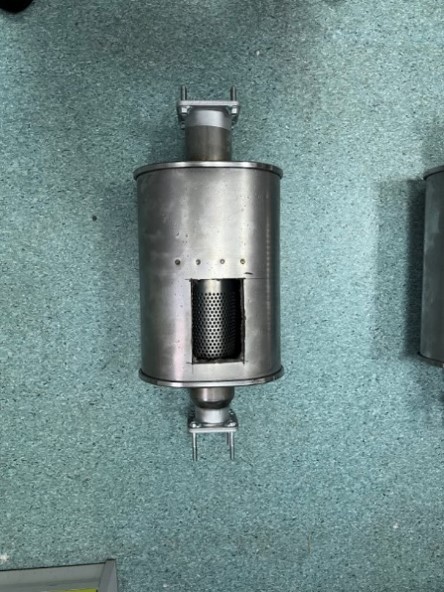
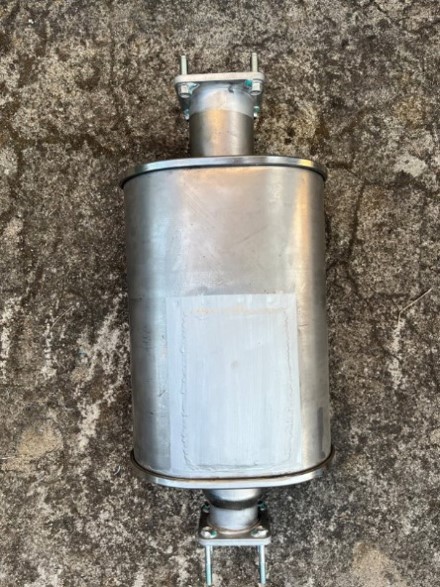
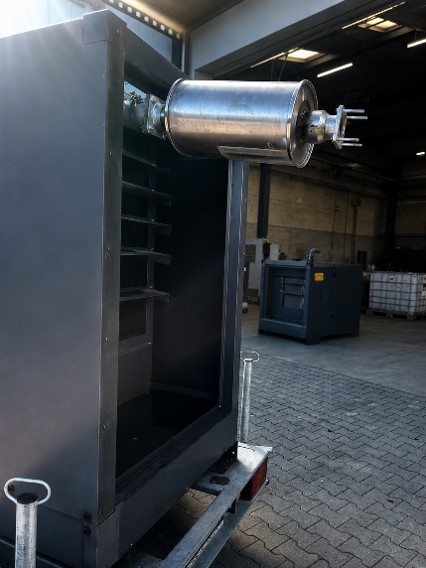
Operational tests – both in a vehicle and on power generators (photo 1) – confirmed the high thermal resistance and mechanical stability of the system. The silencers remained sealed after being cut open and re-welded, and post-test analysis showed active material inside the system, meaning the coating had not degraded.
The project confirmed that a high-temperature active coating can be applied durably and effectively inside exhaust system components and can operate stably under extreme conditions. The results provide a solid basis for further development of the technology – in particular optimising system geometry, increasing the active contact surface and scaling the solution for the automotive industry.
Photo 1. A – silencer prepared for coating; B – sealed silencer after the coating process; C – coating test under controlled conditions using a power generator.
Case studies
Tell us about your process. We will select additives, design a coating or carry out tests tailored to your requirements.